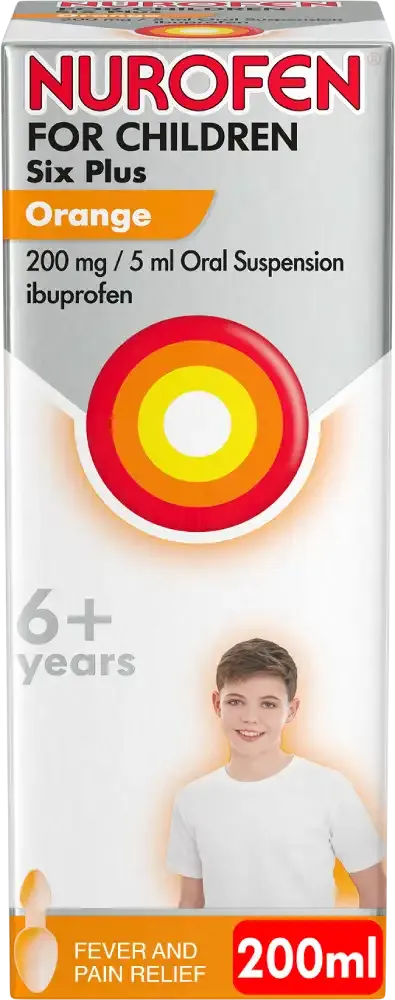


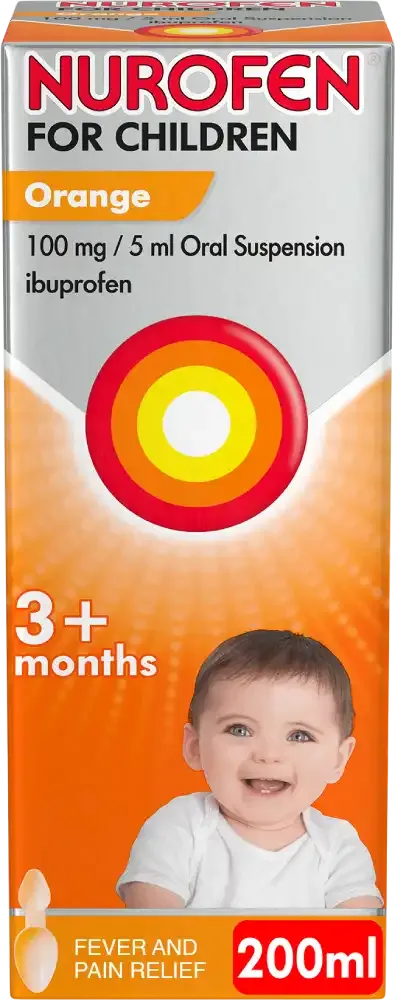
Nurofen for Children Orange 100mg/5ml Oral Suspension
Nurofen for Children provides up to 8 hours fever and pain relief
Headache Fever & pain


A fever is usually considered to be a temperature of 38°C or above and is a sign your child is fighting off an infection.2-4 The rise in temperature helps your child’s immune system to get rid of the infection, by making it difficult for viruses and bacteria to survive.4
Children’s temperatures can also rise after a vaccination or if they overheat because of excess bedding or clothing.5 Close monitoring is the best tactic – that way you’ll know if their temperature rise is a just due to your child wearing too many clothes or if there is something more serious going on.3,5
You can generally tell your child has a fever by touching their forehead, back or tummy or taking their temperature with a thermometer.3 However, a temperature isn’t the only sign.
If a child has fever, they may also:3
In around 5% of children under 6 years of age, a high temperature can also cause a seizure – known as a febrile convulsion – where their body may become stiff and their arms and legs jerk and twitch.6 They might also lose consciousness, vomit or foam at the mouth, roll back their eyes or turn blue.6 Febrile convulsions can be a frightening experience, however they usually only last a few minutes and are not usually serious.6 You should go to A&E once the convulsion has ended just to get your child checked out.6
If your child’s febrile convulsion lasts longer than 5 minutes, or your child has another seizure soon after, or they are having trouble breathing, then call an ambulance for urgent help.6
MORE ADVICE ABOUT FEVER
Understanding Teething in children
Although fever doesn’t always indicate a serious illness, you should always see your doctor urgently if:3
Get emergency help if your child has any of the following as it could be a symptom of serious condition:3
You will naturally want to make comfort a priority when your child has a fever, and avoiding dehydration is important.5 Throughout the day, and during any restless periods at night, give your child small amounts of a clear fluid, such as water, or baby milk.3,5
You may also want to try an over-the-counter fever reliever designed specifically for children. Nurofen for Children contains ibuprofen, which relieves pain and can help reduce fever for up to eight hours in children over 3 months.7
This article is for general information only and not intended as a substitute for medical advice. All information presented on these web pages is not meant to diagnose or prescribe. In all health-related matters, always consult your healthcare professional.